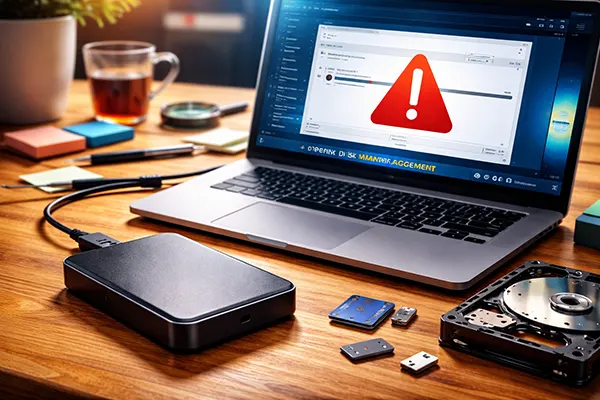
Recovering File Images from Encrypted Hardware SSDs: When Standard Tools Fail
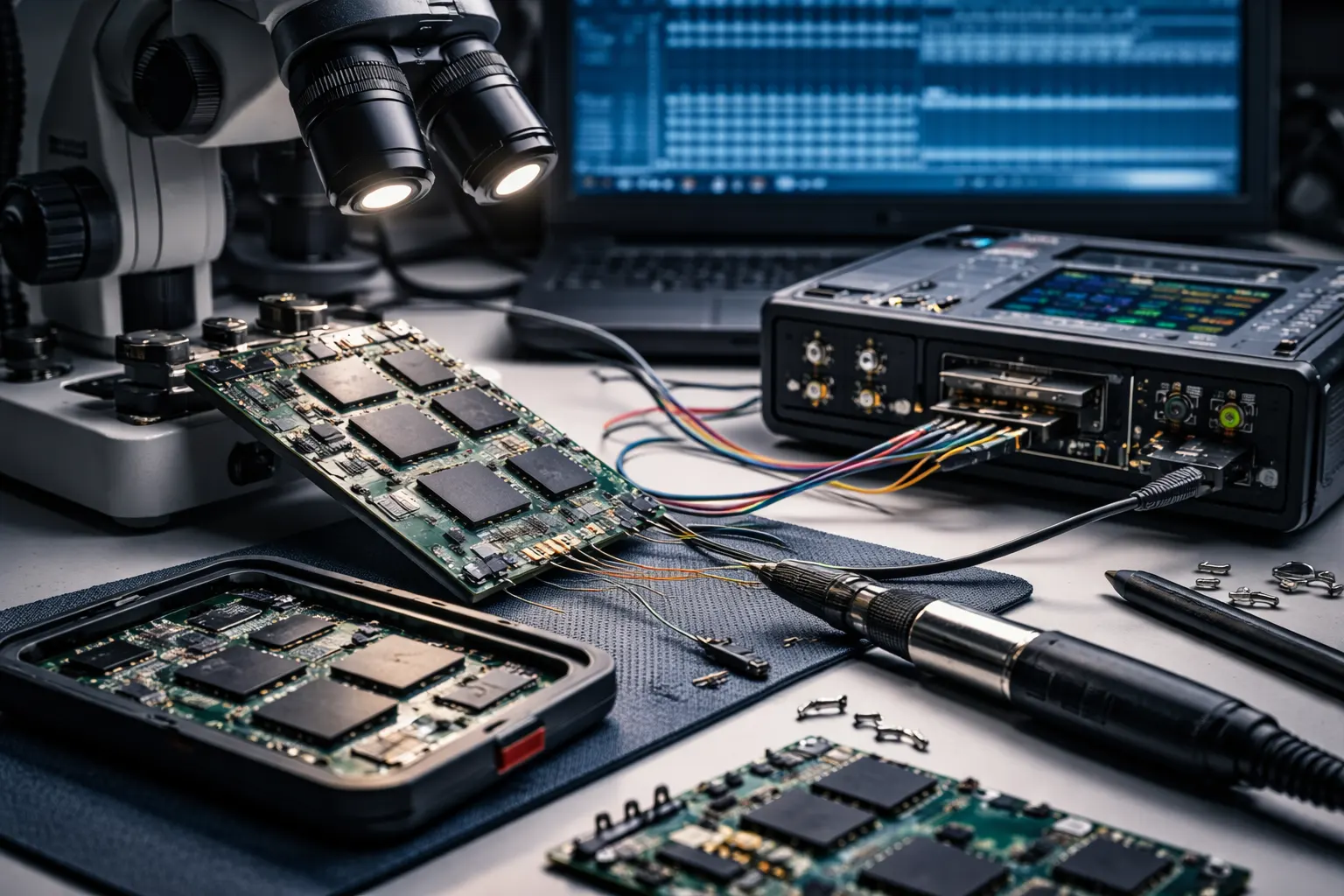
Encrypted portable SSDs such as Samsung T7 and SanDisk Extreme have become widely used due to their speed and built-in security features. However, these same protections create serious challenges when data loss occurs. Traditional recovery tools often fail because they cannot bypass hardware-level encryption. In 2026, data recovery from such devices requires a deeper understanding of controller architecture, encryption layers, and forensic imaging techniques rather than simple file restoration utilities.
Why Hardware Encryption Makes Data Recovery More Complex
Modern portable SSDs rely on hardware encryption implemented directly within the controller. Devices like the Samsung T7 use AES-256 encryption by default, meaning all data is stored in an encrypted state, even if the user has not explicitly enabled password protection. This architecture ensures security but prevents raw data from being interpreted without the correct key.
Unlike software encryption, where recovery tools can sometimes analyse file structures, hardware encryption hides all logical data behind a cryptographic layer. If the controller becomes damaged or the authentication mechanism fails, the stored information appears as random noise. This makes traditional sector-by-sector recovery ineffective.
Another complication arises from firmware dependency. Encryption keys are often stored within the controller’s secure area, not on accessible memory chips. If firmware corruption occurs, even physically intact NAND memory becomes unreadable without reconstructing the encryption context.
How Encryption Keys and Controllers Affect Recovery Success
The success of data recovery largely depends on whether the encryption key can be preserved or reconstructed. In functioning drives, the key is transparently used by the controller, allowing normal access. However, once the controller fails, the key may become inaccessible, effectively locking the data permanently.
In advanced recovery scenarios, specialists attempt to access the controller via diagnostic interfaces or vendor-specific commands. Some Samsung and SanDisk models allow limited communication through factory modes, but these require proprietary tools and deep technical knowledge.
If direct controller access is impossible, engineers may attempt chip-off recovery. However, without the encryption key, extracted NAND data remains encrypted. This is why preserving the original controller state is often more critical than the memory itself.
Professional Techniques Used When Standard Utilities Fail
When conventional software cannot detect or read an SSD, recovery shifts into a forensic approach. The first step typically involves creating a full disk image, but in encrypted drives this must be done through the controller while it is still operational. Imaging after failure is significantly more complex.
Specialised tools in 2026 support low-level communication with SSD controllers, enabling partial bypass of standard interfaces. These tools can stabilise failing drives, manage bad sectors, and extract encrypted images without triggering security lockouts.
Another technique involves firmware repair. If the SSD firmware is corrupted but the hardware remains intact, rebuilding or patching the firmware may restore access to the encryption key. This process is highly device-specific and requires access to firmware databases and engineering utilities.
Chip-Off Recovery and Its Limitations in Encrypted SSDs
Chip-off recovery involves physically removing NAND memory chips and reading them using specialised equipment. While effective for older storage devices, encrypted SSDs present a major obstacle because the data remains encrypted outside the controller environment.
Even with full NAND dumps, reconstructing the original data requires not only the encryption key but also the logical mapping of data blocks. Modern SSDs use wear levelling and dynamic mapping, meaning physical memory order does not correspond to file structure.
As a result, chip-off recovery is typically considered a last resort for encrypted SSDs. It may help in cases where partial metadata can be reconstructed, but full file recovery without encryption context is rarely achievable.

Practical Scenarios and Recovery Outcomes in 2026
In real-world cases, recovery outcomes vary depending on the failure type. If the SSD is physically intact and only the file system is corrupted, recovery may still be possible through standard imaging tools while the controller remains functional.
In cases of controller failure, success depends on whether the encryption key can be accessed. For example, drives that fail due to power issues sometimes retain key data, allowing recovery through controlled reinitialisation procedures.
However, if both the controller and key storage are damaged, recovery becomes extremely unlikely. This is particularly true for devices with strong hardware encryption and no external key backup mechanisms.
How to Minimise Data Loss Risks on Encrypted SSDs
Preventive measures are essential when working with encrypted SSDs. Regular backups remain the most reliable protection, especially since recovery is not guaranteed even with advanced methods. Cloud and offline backups should be combined for redundancy.
Users should also avoid firmware updates unless necessary, as failed updates are a common cause of controller issues. Using official software and maintaining stable power conditions during operations reduces the risk of corruption.
Finally, early diagnosis plays a key role. If an SSD begins to show signs of failure, such as disconnections or slow access, it is critical to stop using the device immediately and create a secure image while it is still accessible.